 (Image source: Gemini)
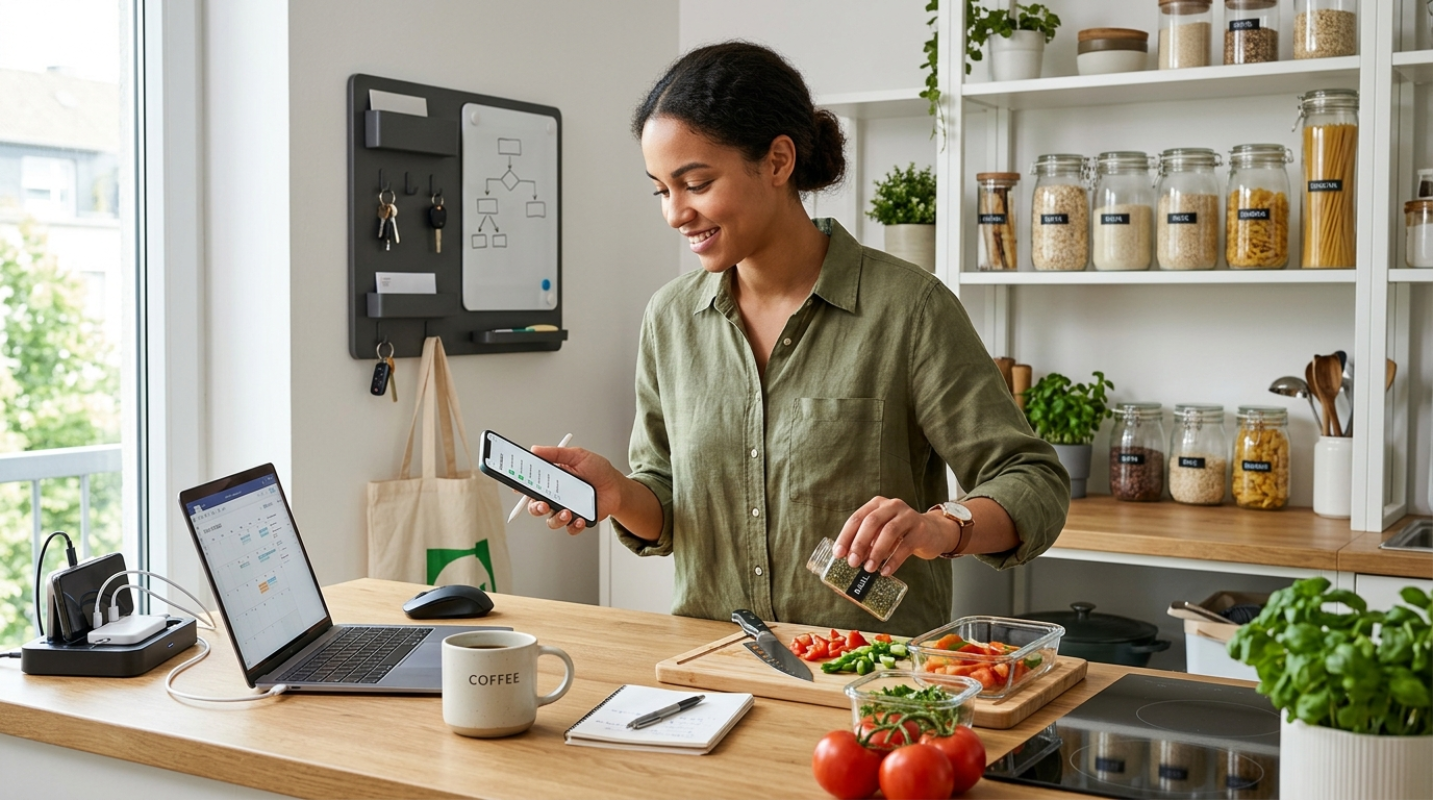
 When you streamline the boring stuff, you're buying back your own time. Think of life hacks not as cheap shortcuts, but as intentional systems designed to protect your sanity. By the time we reach mid-2026, the goal shouldn't be to do more. It should be to have more space to do nothing if that's what you want. Automating the mundane reduces your "mental load," that heavy invisible backpack of tasks you're constantly carrying. When you don't have to decide what's for dinner or when to pay the electric bill, you free up cognitive energy for the things that actually matter. Let's look at how we can make 2026 the year you finally stop feeling underwater.
Digital Organization Taming the Notification Overload
Our phones have become the digital equivalent of a junk drawer. If your home screen is a sea of red notification badges, you're constantly leaking focus. It takes an average of 23 minutes to fully refocus after a single interruption. Think about that. Every time a random app pings you about a sale, you lose nearly half an hour of deep thought.
The first step is a ruthless audit of your digital space. Implement the "Inbox Zero" philosophy, but don't just delete emails. Unsubscribe. If you haven't opened a newsletter in a month, you don't need it. For the stuff you do need, use automation tools like IFTTT or Zapier to handle the routine. You can set up a system where every time you star an email, it automatically creates a task in your calendar.
Digital minimalism is also about what you see. Move every app that isn't a tool (like maps or your calendar) off your first home screen. If you have to search for Instagram, you're less likely to click it out of habit.
AI has also moved from a gimmick to a legitimate partner. Tools like Superhuman AI or SaneBox can triage your inbox for you, automatically sorting the junk from the gems. Research shows that workers using these AI assistants are 33% more productive per hour. It's like having a personal assistant who never sleeps and doesn't need a coffee break.
Home Management Streamlining Chores for More Free Time
A messy home isn't just an eyesore. It's a stressor. In fact, 42% of people report feeling overwhelmed by a messy living space.¹ The "Pinterest-perfect" home is a myth, but a functional home is very much within reach. The trick is to stop fighting your natural habits and start working with them.
Have you ever noticed how mail always piles up on the kitchen island? Instead of trying to force yourself to walk to the office, put a small basket right there on the island. This is called "Desire Path Decluttering." You observe where the mess naturally lands and you place a system exactly in that spot.
Then, there's the "One-Touch" rule. It’s simple. If you pick something up, don't put it down until it's in its final home. Don't put the mail on the counter to deal with later. Open it, file it, or toss it. One touch. This prevents the "death by a thousand tiny tasks" feeling that hits us every Saturday morning.
To keep the house from spiraling, try a 15-minute nightly reset. This isn't a deep clean. It's "setting the stage" for the next morning.² Unload the dishwasher, clear the "drop zone" by the door, and maybe lay out your gym clothes. It's a gift you give to your future self so you don't wake up to chaos.
Time-Blocking Mastery
Stop making long, flat to-do lists. They are lying to you. A list doesn't account for the fact that you have more energy at 10:00 AM than you do at 4:00 PM. Instead, try "Time Boxing." This means you give a task a specific start and end time on your calendar. It prevents "task creep," where a thirty-minute project expands to fill your entire afternoon.
In 2026, the "3-3-3 Method" is the gold standard for productivity. You spend your first 3 hours on your most important project (the deep work). Then, you handle 3 urgent but shorter tasks. Finally, you finish with 3 maintenance tasks like emails or scheduling. It respects your brain's natural rhythms.
Speaking of rhythms, pay attention to your "ultradian rhythms." Our brains can only focus intensely for about 90 to 120 minutes before needing a break. If you're hitting a wall, stop pushing. Use the Pomodoro technique (25 minutes of work, 5 minutes of rest) to keep your momentum without burning out.
As productivity expert Laura Vanderkam says, the key is not to prioritize what's on your schedule, but to schedule your priorities. If you don't put your big goals on the calendar first, the "little stuff" will happily eat up your entire week.
Financial and Planning Hacks for Long-Term Ease
Decision fatigue is real. The more choices you have to make throughout the day, the worse those choices become. This is why you should automate every financial decision possible. Set up your bills on autopay and schedule your savings contributions to leave your account the day after you get paid. If you never see the money, you won't miss it.
For the small stuff, use the "Two-Minute Rule." If a task takes less than two minutes (like replying to a text or hanging up a coat), do it immediately. The energy it takes to remember to do it later is actually greater than the energy it takes to just do it now.
Every Sunday, spend ten minutes reviewing your upcoming week. This tiny investment can recapture up to two hours of wasted time later on. Look for "time leaks" or conflicts before they happen. Are there meetings that could be an email? Cancel them. This is the "Strategic No" in action. Declining 20% of non-needed commitments is the best way to protect your focus.
Starting Your Simpler Path Today
Simplicity is not a destination. It's a practice. You don't need to implement every single one of these hacks by tomorrow morning. In fact, please don't. That’s just adding more to your plate. Instead, pick one. Just one.
Maybe you'll start the "One-Touch" rule today. Or maybe you'll finally unsubscribe from those 50 clothing brands that keep emailing you. The goal is consistency, not perfection. When your systems are working, you stop spending your life managing your life.
A clean home and an organized calendar are great, but they aren't the end goal. The end goal is the freedom they provide. When you aren't hunting for your keys or drowning in emails, you have the mental space to be creative, to be present with your family, and to actually enjoy your life. Start small, stay consistent, and watch how much lighter your world feels.
This article on Findoit is for informational and educational purposes only. Readers are encouraged to consult qualified professionals and verify details with official sources before making decisions. This content does not constitute professional advice.